Five years before the Fourth of July accident
Kelly’s Brown Thesis
At [Brown University](entity:organization-recall-organization-brown-university-09b6e1f7daef), Kelly graduated summa cum laude in American Studies and wrote a ninety-page senior honors thesis about [The Senator](entity:character-recall-character-the-senator-4ce6711fc3cb). Its subtitle framed his career through Jeffersonian idealism and [New Deal](entity:time-recall-time-8777ac2dacca) pragmatism, and her adviser praised the work at length.
The thesis reflected Kelly’s serious interest in political history and the Senator’s record. When she later met him, she initially resolved not to mention it, but the encounter would make her academic admiration part of their growing personal rapport.
After Brown and before the 1988 election
Kelly’s Political Commitments
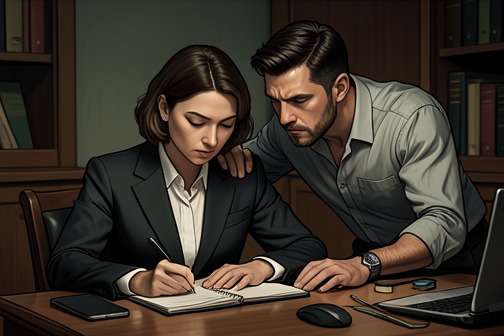
After college, Kelly worked for [Citizens' Inquiry Foundation](entity:organization-recall-organization-citizens-inquiry-8ec3dec40400), a publication connected to the old political world of [Carl Spader](entity:character-recall-character-carl-spader-41342d6ec6a1). She wrote about capital punishment and volunteered through the [National Literacy Foundation of America](entity:organization-recall-organization-national-literac-ebf0eb3cc63f), teaching adults in [Roxbury](entity:location-recall-location-629d52000658) to read, though she privately wrestled with her own condescension and fear in the neighborhood.
Her politics were earnest and personal. She opposed the conservative positions associated with her father’s friend [Hamlin Hunt](entity:character-recall-character-hamlin-hunt-8eb34bd731fc), while her relationship with [Artie Kelleher](entity:character-recall-character-artie-kelleher-8b00ccd786d0) could turn political arguments into disputes about authority and family life.
The closing weeks of the 1988 U.S. presidential election
The Dukakis Defeat
Kelly volunteered for Michael Dukakis’s presidential campaign and believed that voters would reject George Bush. She and fellow workers failed to grasp how decisively the contest was turning against them, while [Artie Kelleher](entity:character-recall-character-artie-kelleher-8b00ccd786d0) angrily criticized her for spending her time on the campaign.
When the landslide became undeniable, Kelly was devastated. She stopped eating and sleeping, wandered through [Boston](entity:location-recall-location-ccccb9ca0ba9) in a dazed state, and finally called her mother to say she did not know where she was and needed to be collected.
The year before the Fourth of July gathering
The End with G-----
After graduating, Kelly had one serious lover, [G-----](entity:character-recall-character-g-48ac6a453b70). Their relationship ended the previous June, leaving her deeply distressed and convinced that she had loved him more than he had loved her. During their intimacy, she had sometimes felt pain and had cried out affection; near the end, his reassurance that he did not want to hurt her only underlined how little power she believed she retained over him.
After the breakup, Kelly punished herself by restricting food and withdrew from friends, who worried about her silence. Over the following year she began eating regularly again, regained some of the weight she had lost, and stopped relying on sleeping pills and the ritual glass of wine she had shared with G-----.
Before the Fourth of July gathering
Kelly’s Unused Condom
For years Kelly carried a condom in her purse, moving it from one handbag to another. Though she was prepared for the possibility of sex in theory, she had never managed to raise the subject with a man or suggest that he use it.
The small, untouched packet became a private emblem of the gap between preparation and speech. Kelly could anticipate an emergency yet remain unable to voice what she needed when it mattered.
Fourth of July afternoon
The Island Invitation
Kelly accepted an invitation from her Brown friend [Buffy St. John](entity:character-recall-character-buffy-st-john-188c83d063f2) to spend the holiday weekend at the St. John family cottage on [Grayling Island](entity:location-recall-location-grayling-island-7f3768c71f5e). The gathering brought together Buffy’s friends, including [Ray Annick](entity:character-recall-character-ray-annick-7fe316835e41), and offered Kelly company at a time when parties had begun to make her feel exposed and uncertain after her breakup.
Kelly was especially glad to find Lucius, a research fellow in plasma physics who admired her work. She feared both being looked at and being overlooked, and his friendly attention gave her a sense that she might have made a genuine connection at the party.
Shortly after two o’clock on the Fourth of July
The Senator Arrives
[Ray Annick](entity:character-recall-character-ray-annick-7fe316835e41) had invited [The Senator](entity:character-recall-character-the-senator-4ce6711fc3cb), though Buffy had not expected him to come. When his Toyota arrived, the guests recognized the famous politician and watched him enter with energetic warmth, greeting people as though they were old friends.
Kelly initially regarded him skeptically as a perpetual campaigner, but his size, physical presence, and evident interest in the people around him made him more compelling than his television image. He changed into a casual shirt, joined the gathering, and soon began speaking with Kelly.
Early afternoon on the Fourth of July
A Familiar Political World
[The Senator](entity:character-recall-character-the-senator-4ce6711fc3cb)’s background overlapped with Kelly’s family world. Like [Artie Kelleher](entity:character-recall-character-artie-kelleher-8b00ccd786d0), he had attended [Phillips Academy](entity:organization-recall-organization-phillips-academy-ed4a30fd36ae) before going to [Harvard University](entity:organization-recall-organization-harvard-universi-c9ea04e1db00), and both men moved among familiar political and social circles, though their conversation did not dwell on those connections.
Kelly also knew that The Senator had been separated from his wife and had adult children. He mentioned that his wife was spending the weekend with her family, leaving him alone, a disclosure that helped Kelly regard his attention as less clearly forbidden than it otherwise might have seemed.
Early afternoon through the party
The Senator’s Political Confidences
In conversation with the guests, [The Senator](entity:character-recall-character-the-senator-4ce6711fc3cb) spoke about the Supreme Court, social reform, and the erosion of civil-rights gains. He lamented the political climate but remained animated, attentive, and practiced in the public role that had made him famous.
He also described the cost of celebrity: repeatedly hearing his own principles spoken aloud while seeing little change in the world. Kelly took his candor as a sign that he was speaking to her differently from how he addressed the crowd, though she was also aware that a politician’s warmth could be part of his public performance.
Afternoon on the Fourth of July
Kelly and the Tennis Match
Kelly watched [The Senator](entity:character-recall-character-the-senator-4ce6711fc3cb) play doubles tennis with [Ray Annick](entity:character-recall-character-ray-annick-7fe316835e41) against younger men, including Lucius and Stacey’s partner. The Senator showed skill and sportsmanship, but the younger players gradually wore him down, revealing the limits beneath his confident, practiced physical presence.
Kelly slipped away before the match ended, not wanting him to see her studying him. The scene reinforced her sense that competition disclosed something of a man’s character, while also drawing her further into observing The Senator as both a person and a public figure.
Later on the Fourth of July afternoon
The Beach Conversation
Kelly and [The Senator](entity:character-recall-character-the-senator-4ce6711fc3cb) walked together along the beach, where he asked about her work, her life, and whether she had a boyfriend. He said he had read her article opposing capital punishment and asked whether she might consider working for him in Washington sometime.
Their conversation moved between politics and personal attraction. Kelly challenged his view of political generations and argued that women could not afford to find politics boring, while he listened and treated her as an intelligent interlocutor. His attention flattered her and made the possibility of a future professional connection feel vivid.
During the beach conversation
Kelly’s Capital Punishment Argument
Senator asked Kelly why she wrote about the death penalty. She explained that her research made her more and more repelled; he confirmed his opposition to the death penalty and pointed out that in a civilized society, state executions are unacceptable, especially since the judicial system may wrongly convict innocent people, which is more
Late afternoon on the Fourth of July
The Beach Kiss
As they walked and talked, the senator noticed that Kelly was shivering, so he touched her arm. He asked if she was cold, and if she wanted to turn back; she said no. Then, he deliberately held her shoulder and kissed her. Kelly was surprised, but also excited. She
Late afternoon on the Fourth of July
The Invitation to Leave
After kissing Kelly, the senator continued to ask her if she had a boyfriend or if she was interested in joining his team. His attitude seemed to carry a touch of humor, rather than open coercion; but he had repeatedly invited her and clearly expressed his hope that she would go with him. Kelly originally
Late afternoon on the Fourth of July
Buffy’s Warning
In the kitchen, Buffy told Carrie that she got along well with the senator, then reminded her that the senator had voted to support aid to the Nicaraguan anti-government armed forces. This statement could be interpreted as a joke, a warning, or a politically charged factual statement; Carrie did not take
The night before and the Fourth of July
The Horoscope’s Permission
Kelly and her friends read an astrology prophecy for Scorpio, which urged readers to reveal their desires and strive for what they want. Kelly did not believe in astrology, but those words resonated with her longing for a passionate and romantic new adventure after a long period of disappointment. This astrology prophecy became her
Before Kelly leaves the party
A Childhood Warning Resurfaces
Kelly remembered her mother's warning: no matter how honest a woman is, or how much a man loves her, a man will never tolerate a woman making herself look foolish. This belief helps explain why, when the senator's driving, drinking, or decisions made her uneasy, she still hesitated to
Early evening on the Fourth of July
The Missed Ferry
Kelly and the senator originally planned to catch an earlier ferry, but the party continued, and the senator had another couple of drinks. When they were ready to leave, the target time became 8:20 PM from Brockton Wharf to Busbee Harbor. The delay made the schedule more urgent
About 7:55 p.m. on the Fourth of July
The Departure from the Cottage
Kelly and the senator left the vacation house at Saint John's about twenty-five minutes before the ferry was to depart. Buffy caught up with Kelly on the drive and shook her hand, telling her to call back the next day. Kelly did not explain why she was leaving or admit how much she felt she
About 8:00 p.m. on the Fourth of July
The Wrong Turn
The senator drove a rented Toyota toward Brockton Wharf, talking and drinking with Kelly along the way. They passed a weathered sign and turned onto the old ferry road — a road that had been abandoned, rough and uneven; after the new road was laid, it had never been maintained. This
About 8:10 p.m. on the Fourth of July
The Shortcut Assurance
When the Toyota car was bouncing along the narrow unpaved road, the senator's wine in his glass spilled out and soaked onto Kelly's leg. She noticed the poor road conditions, the darkening sky, and the unfamiliar swampy surroundings, and tactfully told him that she thought they had gotten lost
About 8:15 p.m. on the Fourth of July
The Unmarked Hairpin
The road winds through the swamp, with no signs or proper guardrails. Ahead is a narrow and old wooden bridge, also with no warnings; neither Kelly nor the senator knew that the stream crosses the road beneath the curve. The Toyota approaches rapidly. Kelly smells something like sewage, gripping her seatbelt
About 8:15 p.m. on the Fourth of July
The Toyota Skids Off
Toyota car crashed into a sand pit and slid sideways. The senator stepped on the brakes, but the car still rushed towards a rusted fence, which collapsed with the impact, and the car then slid down the embankment into black water. Kelly heard the senator's scream and felt the impact vibrations
Minutes after 8:15 p.m. on the Fourth of July
The Car Sinks
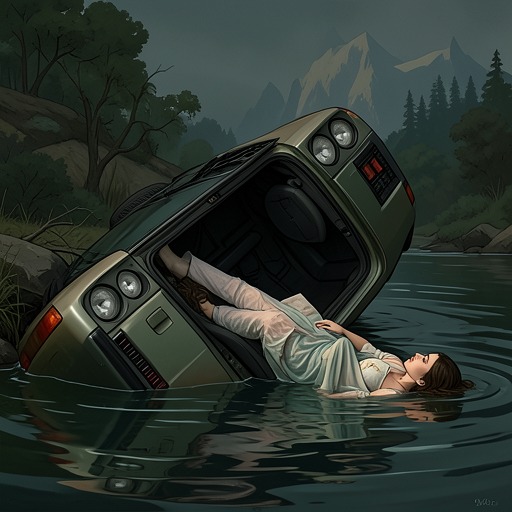
[Black water](entity:concept-recall-concept-945a48d499eb) flows over the engine hood and cracked windshield, flipping the Toyota over and lying on its side in the Indian River. The passenger side door and part of the roof are indented inward, trapping Kelly inside the car; the radio and sounds from the outside are also swallowed by the water and darkness
Within minutes of the crash
The Senator Escapes
The senator broke free from his chair, struggling out through the driver's side door; he forced the door open against the water pressure. Kelly was trapped on the passenger side, her leg stuck, and she reached for his arm, then grabbed his pants leg, pleading with him not to leave. In
Shortly after the Senator reaches shore
Kelly’s First Pleas
Stranded alone in a submerged car, Kelly shouted for help and tried to identify the narrow, dark space around her. Her head was injured, her right leg trapped, and her ribs possibly broken; but the shock made her temporarily feel most of the pain. She deduced there must be several air
During the first hours after the crash
The Story She Rehearses
Kelly imagined explaining the accident to her friends and telling them that [The Senator](entity:character-recall-character-the-senator-4ce6711fc3cb) had gone for help. She pictured being rescued and later turning the ordeal into a story: a terrible near-drowning made survivable by the air left in the car and, perhaps, by a miracle.
The imagined account gave her a future tense to inhabit. She held to the idea that she would speak again, rehearsing a version of events before she could know whether there would be anyone to hear it.
About 9:55 p.m. on the Fourth of July
The Senator Calls Ray
At a roadside telephone booth, [The Senator](entity:character-recall-character-the-senator-4ce6711fc3cb) called [Ray Annick](entity:character-recall-character-ray-annick-7fe316835e41) using the name Gerald Ferguson to reach him. When Ray came to the phone, The Senator admitted that he was calling and said there had been an accident and that the girl was dead.
He blamed Kelly, claiming she had been drunk and had grabbed the wheel, and feared a manslaughter charge. Ray stopped him from discussing details over the phone and offered to come get him. The call exposed The Senator’s immediate instinct to protect himself and enlist his friend, even as Kelly remained trapped in the car.
During her continued entrapment
Kelly’s Childhood Returns
Kelly’s mind moved between the present danger and memories of childhood: her grandparents’ home, the strawberry-print dress made for her, her parents’ faces, and [Grandpa Ross](entity:character-recall-character-grandpa-ross-7944a58a98b8)’s love. She imagined her family arriving to save her or waiting at the hospital, and she worried that her death would destroy them.
She also remembered the childhood promise that she was somebody’s little girl, a reassurance that had once made the world feel safe. In the submerged car, those memories could comfort her only intermittently, as her body weakened and the water continued to rise.
As the air pocket shrinks
Kelly’s Resolve to Live
Kelly repeatedly told herself that she was an optimist and that she would not give in. She tried to keep her head above the water, pull herself free of the metal, and preserve the air pocket, even while her leg remained pinned and her strength failed.
Her resolve drew on memories of her earlier despair and her vow after [G-----](entity:character-recall-character-g-48ac6a453b70) that she would not take her own life. The crisis transformed optimism from a political slogan into a physical act: holding on, breathing, and refusing to surrender while she could still move.
Near the end of Kelly’s entrapment
The Rescue She Imagines
Kelly imagined hearing [The Senator](entity:character-recall-character-the-senator-4ce6711fc3cb) call her name and seeing him dive back into the water, search for the car, and wrench open the door. In the imagined rescue, he found her, pulled her free, and brought her to the surface, where she could swim again and see the night sky.
The vision gave her a moment of intense gratitude and relief, but it could not undo the actual damage or prove that rescue was coming. Her fantasy of being saved by The Senator converged with childhood images of her parents and grandparents, as memory, hope, and reality became inseparable.
Late on the Fourth of July
Kelly’s Final Drowning
As the black water filled the shrinking space and her lungs, Kelly’s thoughts lost their names and their order. She could no longer reliably understand where she was or what had once been air, light, or life.
The novel ends with her imagined return to the surface and to her family collapsing into the fact of her death. Kelly dies trapped in the overturned car, while her parents stare at her without recognizing the child she once had been. The rescue she had rehearsed never arrives.